Building a Career Worth Waking Up To! Part 1: Everyone's tired
8 min read
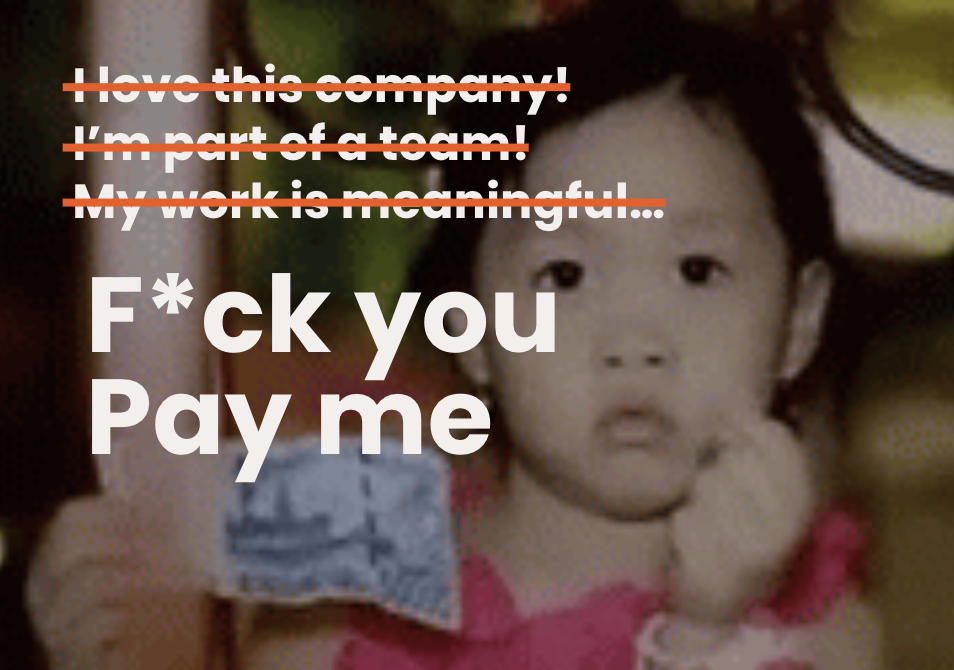
In this 2-part series, I’m using the keynote I created for the BLEND conference as a foundation to discuss what’s wrong with tech careers and what we can do to fix them. In Part 1, I dive into the problems we’re facing and share some good news. In Part 2, I’ll explore your superpowers and the hidden job market.
Part 1: Everyone’s tired.
Table of Contents
In prep for my talk at BLEND, I spoke with a bunch of folks from my network. I asked them how they felt about their careers and their current jobs. Unsurprisingly, no one said, “I love my job” or “I can’t believe I get to do this work and get paid.” If you’re reading this and things are great in tech, then this post might feel outdated. But 2025? BLEAK.
🪫 The Career Burnout Epidemic
The Burnout is Real
We're working longer hours, from our bedrooms. Tech has blurred the lines between work and play, with everything now on our phones. Recently laid-off workers are being asked why they’re excited to work at their next job. It doesn’t quite add up, does it?I looked at data. Of course, I did! Globally, 77% of us are disengaged at work. Remember that project you were excited about when you started? That feeling has statistically disappeared for most people, replaced by a mundane, clock-punching mentality. The Canadian data is alarming, too: 77% of knowledge workers in Canada have an unhealthy relationship with their work. Think about that. Most of us are struggling with how work fits into our lives.
Even more heartbreaking, one in five people report feeling profoundly lonely at work. I felt this acutely at my most recent jobs, where I’d be surrounded by Zoom meetings all day but was the only leader on the exec team fighting to bring design (shorthand for THE CUSTOMER) closer to the heart of the business. A common sentiment shared by a bunch of design leaders I know — it’s lonely when, as a leader, you’re a minority advocating for a more customer-centric approach rather than focusing solely on the bottom line.
If everyone else is doing the same thing, consider doing something different.
🤦🏾♂️ Why is this happening?
This is not working for anyone!
Tech has INVENTED and encouraged toxic behavior in the workplace by prioritizing metrics that often conflict with both customer needs and the well-being of the employees who are actually building the products.Breaking things:
Facebook’s motto was “Move fast and break things,” right? Well, they moved fast alright—building addictive platforms, harvesting our data, and optimizing for engagement over wellbeing. And what broke? Now we have a platform spreading misinformation at an industrial scale. I suggest: Move fast, try things. But never break people. Nothing is more important than people. It’s not catchy, it’s long… but so is life. So don’t make products that cause pain.
Ruthless Growth:
WeWork’s rise and spectacular fall—the “growth at all costs” mentality—meant taking on unsustainable leases, creating a cult-like culture, and ultimately watching $47 billion in valuation evaporate when reality caught up. Adam Neumann walked away with a billion dollars while employees got pink slips.
Here’s my alternate to “growth at all costs” motto: Make products responsibly that will benefit generations to come. Even billionaire capitalist Jeff Bezos has said: “One day, Amazon will fail but our job is to delay it as long as possible”. So why not make products responsibly that generations of people will use and love? (Ugh, I just quoted Jeff Bezos. I’ll do better, please stick with me.)
Inhumane, Nonsensical Layoffs:
There’s a formula for layoffs. It’s so formulaic, it’s vulgar—mass email on a Friday, no warning. Stock prices jump up the following Monday. Following massive, irrational growth with massive layoffs seems reckless and heartless. And it is. What the shareholders didn’t see were the devastated folks who’d given years of their lives to that company. 20% layoffs equals 5% stock price jump—but also thousands of people who lost faith in the company they believed in. They’ll never be the same again. I coach a few of them and the pain is real.
COVID Distancing:
We are still too close to the COVID pandemic to see how it has changed us—maybe forever. Many of us went from offices to bedrooms overnight. I remember spending eight hours on Zoom calls and, at one point, attending two calls simultaneously. That was the moment I knew I had to quit.
The fragile need for Masculine Energy:
Let’s be honest about “bro culture” too—beer pong games, 11 PM whiskey sessions, and endless militaristic war language references are exclusionary and don’t help people build healthy lives where they set clear work/life boundaries. Masculine energy has not brought peace and joy to the world in recent memory.
🌟 The Good news!
You Are in Control!
You don’t need to wait for the economy to improve to take control of your career! A few simple shifts in mindset and ways of being will have you back in the driver’s seat.
I’m optimistic. Tech is made up of a broken system created by unseasoned folks who didn’t know better. They’re not your personal failures. More importantly, you don’t need to wait for entire industries to reform to create a fulfilling career. While tech figures itself out and “refactors” its code, just know…You have more control than you realise! I am here to suggest a few reframes that might just help you shift your mindset, focus on what’s important to you. And when you’re clearer on what you want, the world will conspire to get it for you. (I have paraphrased Paulo Coelho and the Alchemist)
🗺️ Use your Career GPS
What you need is a navigation system — your Career GPS. I dive deeper into identifying strengths and growth areas in my 8-week leadership program, but let’s run a few quick diagnostics to get a sense of how well-calibrated your Career GPS is right now!
Look Back
Without overthinking it, jot down three moments of joy and three moments of despair from your past jobs—or, if you’re early in your career, think back to school. Look for moments that sparked purpose, excitement, and that elusive feeling of joy. The “wow, I can’t believe I get paid to do this” moments. Then, do the same for despair. What were the moments that filled you with dread, the “I really don’t want to do this” or the “I hate this project/team” kind of feelings?
The moments of joy are like pins you drop on a map—places you want to move towards. The moments of despair are your guardrails, reminding you of turns you don’t want to take and places you’d rather avoid. Yelp ratings: 1 star.
When I coach executives who feel stuck, we begin by reflecting on their journey. One client, a staff-level designer, experienced a moment of despair tied to toxic leadership and competitive environments that didn’t align with her collaborative nature. She decided to move to a senior designer role at a different company where she could be closer to the work and still mentor a team. Sometimes, it’s not the job responsibilities you need to change, but the company itself. Titles in our industry can be misleading and often don’t align with actual responsibilities. Once you understand where your expertise truly lies, seek out roles that match your skill set. Job title ≠ The Job. Once you know what you want, you will be a better interviewee, a better question-asker, and have a better nose to smell the roses from the 💩!
Look Around
Looking around is about honest assessment. What do people come to you for? Unlike the first exercise, this is about other people, not you. Why do people find you useful? Are you the one who is calm under pressure? Or are you a helper, the one who would help someone even if you’re busy? Or are you an awesome networker, who can connect folks to people they need to know?
Write down the intrinsic thing that you’re good at. It may have very little to do with your job title. It is who you are and what value you bring to the people around you. I mentored a product designer who was always tapped to explain our customer journey and JTBD by everyone—not just other designers. She switched to research as she realized she cared more about the customer puzzles to solve than moving pixels.
Look Ahead
Let’s do 3 quick tests to figure out how supported and clear you are on where your career journey is going.
- Who are your mentors? Paid or unpaid, write down the names of people you’ve relied on to help you view your career moves objectively. Who can help you solve some of work's puzzles and keep you aligned with your values?
- What are you curious about? What’s happening around us that makes you say, "Hmm, this is interesting, and I need to know more about this?" I’ll take a shot for every person who writes AI—send me some mezcal.
- What tests are you running? What experiments are you doing to see if a new direction is right for you? For example, taking on extra responsibilities at work, enrolling in a course or certification, or reading a book on something you want to learn about.
I’ve always tried to have a personal board of directors—a group of 3-4 people who meet with me 4 times a year for an organized session to discuss my career as if it were a company they were advising. By assigning them as my board, I don’t feel guilty hijacking an entire session to talk about just my career. It’s mega helpful to have the continuity and clarity of someone else’s eyes on your career.
I’d love to continue this conversation with you. Add me on Substack, and let’s navigate this chaotic career landscape together. If you are trying to figure out what’s next for your career, or need help understanding and working on your leadership skills, hit me up!
Stay tuned for Part 2, where we will dive deeper into the myths about career progression, and how you can future-proof your career.
Discover Another Post

Can I be happy at work?
I love my job! Not something you hear much. And the last few years have proven that companies aren’t looking out for ...
Read More